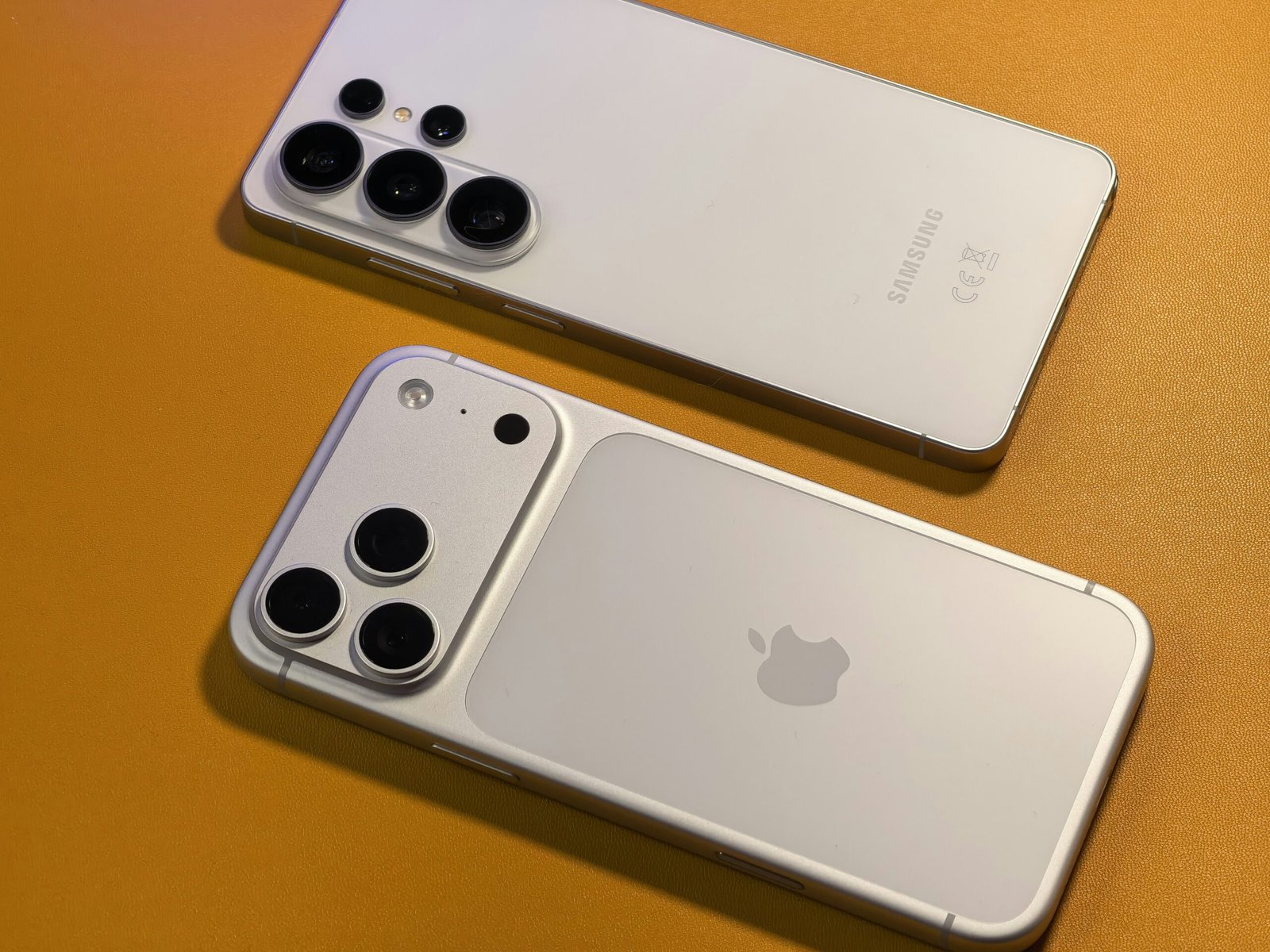
Android vs iPhone: Which Smartphone Is Better in 2026?
The Android vs iPhone debate has been going on for years, but in 2026 the question has become more complicated than simply asking which phone has better hardware. Both platforms have reached a high level of maturity, and the differences now involve artificial intelligence, software experience, customization, cameras, battery life, privacy, security, ecosystem integration, pricing, and long-term support.
Apple’s iPhone 17 generation and the latest Android flagships, including the Samsung Galaxy S26 series and Google Pixel 11 family, offer powerful processors, advanced cameras, excellent displays, fast connectivity, and sophisticated AI features. At the premium end, the hardware gap between the two platforms is smaller than it was in previous generations. The more important question is which ecosystem better matches the way you use your smartphone.
Android continues to offer greater hardware variety. Users can choose from affordable phones, gaming smartphones, camera-focused devices, foldables, business phones, and premium flagships. Samsung, Google, OnePlus, Xiaomi, Motorola, and other manufacturers provide different approaches to Android.
The iPhone, meanwhile, focuses on a smaller number of models and a tightly integrated experience between hardware and software. Apple’s ecosystem is particularly attractive to people who already use products such as MacBooks, iPads, Apple Watches, and AirPods.
Artificial intelligence has also changed the competition. In 2026, AI is becoming one of the biggest differences between smartphones. Android manufacturers and Google have pushed features such as Gemini, call screening, contextual assistance, AI photography, and proactive suggestions, while Apple continues developing Apple Intelligence and AI-powered features within iOS. Current comparisons suggest Android has generally been more aggressive in integrating AI functionality, although Apple’s approach benefits from its tightly controlled ecosystem.
So, which smartphone is better in 2026?
The honest answer is that neither platform is universally better. Android is generally better for flexibility, customization, hardware variety, and advanced features. iPhone is often better for simplicity, ecosystem integration, video recording, app consistency, and resale value.
Let’s compare both platforms in detail.
Android vs iPhone: Quick Comparison
Before looking at individual categories, it helps to understand the overall differences.
Android is an operating system used by many manufacturers, while iOS is Apple’s mobile operating system and runs only on iPhones.
Android gives consumers a much wider range of choices. You can buy relatively affordable Android phones or spend over $1,000 on a premium flagship. You can also choose different screen sizes, camera configurations, charging technologies, foldable designs, stylus support, and software experiences.
iPhone offers fewer choices but provides a more controlled experience. Apple designs the processor, operating system, hardware, and many core services around each other.
In 2026, both platforms offer excellent performance, cameras, security, and AI capabilities. The biggest differences are therefore increasingly about freedom versus consistency.
1. Design and Hardware
Android wins when it comes to hardware variety.
Samsung’s Galaxy S26 Ultra offers a large premium display, advanced cameras, S Pen support, and a range of productivity features. Google focuses on AI and photography with the Pixel 11 lineup. Other manufacturers continue experimenting with extremely fast charging, gaming hardware, foldable displays, unusual camera systems, and thin designs.
This variety allows Android users to select a phone based on very specific requirements.
Want a foldable? Android has several options.
Want a gaming phone? Android manufacturers offer dedicated gaming devices.
Want extremely fast charging? Several Android manufacturers compete aggressively in this area.
Want a stylus? Samsung offers the Galaxy S26 Ultra with S Pen functionality.
The iPhone takes a different approach. Apple’s hardware strategy is more controlled, with a smaller selection of models designed around a consistent ecosystem.
This makes iPhone easier for consumers who do not want to compare dozens of manufacturers and specifications.
The Galaxy S26 Ultra is currently one of Android’s strongest flagship examples. It has also performed exceptionally well commercially, becoming the best-selling Android smartphone in Q2 2026 according to Counterpoint data reported by Android Central.
Winner for hardware variety: Android
Winner for consistency: iPhone
2. Performance
Both Android and iPhone offer extremely powerful processors in 2026.
Apple’s custom-designed chips remain highly competitive, particularly for CPU-intensive workloads, video processing, gaming, and professional applications.
Android manufacturers use processors such as Qualcomm’s latest Snapdragon platforms and Google’s Tensor chips. The Galaxy S26, for example, uses a Snapdragon 8 Elite Gen 5 platform and offers 12GB of RAM in its base configuration.
The Pixel 11 takes a different approach. Google’s Tensor G6 focuses heavily on AI capabilities rather than simply competing for benchmark numbers. Current reviews describe the Pixel 11 as particularly strong for AI-powered functions, although its raw performance does not necessarily match the strongest Apple and Samsung alternatives.
For normal users, the difference is unlikely to matter much. Social media, web browsing, messaging, video streaming, photography, and ordinary applications run smoothly on modern flagship devices.
The difference becomes more noticeable in demanding tasks such as gaming, professional video editing, 3D applications, and long-duration heavy workloads.
Winner: Slight advantage to iPhone for raw performance, but Android offers more high-performance choices.
3. Artificial Intelligence
AI has become one of the most important smartphone battlegrounds in 2026.
Google has integrated Gemini deeply into Android, while Samsung adds Galaxy AI features on compatible devices. Google’s Pixel phones are particularly focused on AI-powered photography, call handling, assistance, messaging, and contextual features.
For example, the Pixel 11 includes AI capabilities such as Gemini-powered assistance, Magic Capture, Daily Brief, and other contextual features.
Samsung also continues expanding Galaxy AI. Features can assist with photography, productivity, communication, and personalized suggestions.
Apple’s Apple Intelligence provides features such as writing assistance, image cleanup, notification summaries, and Visual Intelligence.
However, current 2026 comparisons indicate that Android manufacturers have generally been more aggressive with AI integration. Tom’s Guide notes that Android’s AI ecosystem has developed a wider range of practical features, while Apple Intelligence remains more conservative in several areas.
This does not mean Apple has lost the AI competition. Apple’s advantage is its ability to integrate AI with its hardware, operating system, privacy architecture, and ecosystem.
But if AI features are your primary reason for buying a new phone, Android currently has a strong advantage.
Winner: Android
4. Camera Quality
Camera competition between Android and iPhone is extremely close in 2026.
iPhones are famous for consistent image quality, natural colors, strong video recording, reliable autofocus, and excellent computational photography.
Android flagship phones can offer more aggressive camera hardware.
The Samsung Galaxy S26 Ultra is an excellent example. It uses a 200MP main camera and multiple telephoto cameras, making it particularly strong for zoom photography. Current testing places the S26 Ultra among the leading camera phones of 2026.
Google’s Pixel 11 family focuses heavily on computational photography and AI-assisted image processing. Pixel phones can produce impressive results without relying entirely on enormous camera sensors.
Apple’s iPhone 17 Pro models continue to compete strongly, particularly in video, color consistency, portrait photography, and overall reliability.
If you want maximum zoom flexibility, Android flagship phones often have the advantage.
If you prioritize video recording and consistent point-and-shoot results, the iPhone remains extremely competitive.
Winner for zoom: Android
Winner for video: iPhone
Winner overall: Tie
5. Software Experience
Android and iOS feel very different.
Android is designed around flexibility. Users can customize home screens, widgets, launchers, default applications, file management, and many other aspects of the interface.
Samsung’s One UI provides additional features and customization, while Pixel phones offer a cleaner Google-designed Android experience.
iOS is more controlled. Apple determines how many aspects of the interface and operating system work.
This can be a disadvantage for advanced users who want extensive customization, but it can also be an advantage for people who want a consistent and predictable experience.
iOS tends to feel straightforward for users who prefer simplicity.
Android tends to be better for users who want control.
Winner for customization: Android
Winner for simplicity: iPhone
6. Customization
Android has traditionally been the clear winner in customization, and that remains true in 2026.
Android users can often change launchers, widgets, icons, default applications, notification behavior, file-management workflows, and other elements of the interface.
Samsung devices provide additional customization options through One UI.
Android is therefore particularly attractive to power users.
iOS has become more customizable than older versions of Apple’s operating system, but it still does not provide the same level of freedom as Android.
For users who enjoy modifying their phones and creating highly personalized home screens, Android remains the better choice.
Winner: Android
7. App Ecosystem
Both platforms have enormous app ecosystems.
Most major applications are available on both Android and iPhone, including WhatsApp, Instagram, Facebook, YouTube, TikTok, Spotify, Netflix, banking applications, productivity tools, and AI applications.
However, there can still be differences in optimization.
Developers often prioritize iOS for certain premium applications and services because Apple’s device lineup is relatively controlled.
Android’s enormous variety of hardware can make optimization more complicated.
For ordinary users, however, the difference is relatively small.
Winner: iPhone by a small margin
8. Gaming
Both platforms are excellent for mobile gaming.
iPhones benefit from powerful Apple silicon and strong game optimization.
Android offers more variety. Gaming-focused manufacturers provide devices with high-refresh-rate displays, advanced cooling systems, shoulder triggers, large batteries, and gaming-specific software.
Samsung’s flagship phones also provide powerful gaming performance.
Android therefore offers more specialized gaming hardware.
The iPhone is an excellent choice for someone who wants strong gaming performance without buying a gaming-specific phone.
Winner for specialized gaming: Android
Winner for overall performance: iPhone
9. Battery Life
Battery performance depends heavily on the individual model.
Some Android phones have extremely large batteries and fast charging.
Samsung, OnePlus, Xiaomi, and other manufacturers have invested heavily in charging technology.
The iPhone uses a different approach, combining hardware efficiency with Apple’s software optimization.
Modern iPhones can deliver excellent battery life, but Android gives users more options for very large batteries and ultra-fast charging.
The Samsung Galaxy S26, for example, is reported to provide more than a day of typical battery life in testing, although its wired charging remains relatively conservative compared with some Android competitors.
If charging speed is one of your top priorities, Android is generally the stronger platform.
Winner: Android
10. Charging
Charging is another area where Android often wins.
Many Android manufacturers offer extremely fast wired charging.
Some Android phones can recharge a large portion of their batteries in a short period, depending on the charger and model.
Apple has improved charging over generations, but it generally takes a more conservative approach.
For people who frequently forget to charge their phone and need a quick battery boost, fast-charging Android phones can be particularly useful.
Winner: Android
11. Software Updates
Long-term software support has become much more important.
Nobody wants to purchase an expensive phone and discover that it will stop receiving important updates after a short period.
Apple has historically provided excellent long-term iOS support across its devices.
However, Android has improved significantly.
Google’s Pixel 11 series, for example, is marketed with seven years of software support.
Samsung has also dramatically improved its update policies for flagship devices.
This means the old assumption that Android phones receive updates for only a short time is no longer universally accurate.
Still, Apple maintains an advantage because its hardware and software ecosystem are controlled by the same company.
Winner: iPhone
12. Privacy and Security
Privacy is an important difference between the two platforms.
Apple has built much of its brand around privacy and emphasizes minimizing unnecessary data collection.
iOS provides strong permission controls and tightly controls applications through the App Store.
Android has also become much more secure over time. Google provides security updates, app scanning, permission management, and privacy controls.
However, because Android exists across many manufacturers, the experience can vary depending on the device.
Premium Google and Samsung phones receive strong security support, while some cheaper Android devices may have less impressive update policies.
For users who prioritize a controlled privacy ecosystem, iPhone has an advantage.
Winner: iPhone
13. File Management
This is one of the categories where Android remains particularly attractive to power users.
Android generally provides a more flexible file-management experience.
Users can browse files, download documents, move folders, connect external storage, and interact with the file system more freely.
iOS has improved file management significantly, but Apple still maintains tighter control.
This can be beneficial for security and simplicity, but it can frustrate advanced users.
For students, developers, professionals, and people who frequently transfer files, Android can be more convenient.
Winner: Android
14. Connectivity With Computers
The answer depends on your computer.
If you use a MacBook, iPad, and Apple Watch, the iPhone is usually the obvious choice.
Apple’s ecosystem allows devices to work together through features such as AirDrop, Handoff, iCloud, and Continuity.
For example, you can start working on one Apple device and continue on another.
Android works particularly well with Windows PCs and Google services.
Samsung also offers strong connections between Galaxy phones and Windows computers.
Cross-platform sharing has improved significantly in 2026. Recent developments have made Android-to-iPhone file sharing easier through Quick Share and AirDrop compatibility on supported devices.
Winner for Apple ecosystem: iPhone
Winner for Windows flexibility: Android
15. Smartwatches and Accessories
The Apple Watch is one of the strongest reasons to remain inside Apple’s ecosystem.
If you already own an Apple Watch, switching to Android can be inconvenient because the watch is designed primarily for iPhone users.
Android users have access to Samsung Galaxy Watch, Google Pixel Watch, and many other wearables.
There are also more choices in Android accessories.
However, Apple offers a particularly polished combination of iPhone, Apple Watch, AirPods, and Mac.
Winner for ecosystem integration: iPhone
Winner for hardware variety: Android
16. Messaging
Messaging has historically been a major difference between the platforms.
Apple’s iMessage ecosystem remains deeply integrated into iOS.
Android users rely heavily on RCS and third-party messaging applications such as WhatsApp.
The situation has improved considerably because modern messaging standards have made cross-platform communication easier.
For international users, WhatsApp is particularly important. In countries such as Pakistan, WhatsApp is much more relevant to everyday communication than iMessage.
Therefore, the practical advantage of iMessage depends heavily on where you live and which services your friends and family use.
Winner: Depends on your social circle
17. Foldable Phones
Android dominates the foldable market.
Samsung, Google, Motorola, and other Android manufacturers offer foldable smartphones.
The Galaxy Z Fold series provides a phone that can open into a larger tablet-like screen.
Flip-style phones provide a compact device that opens into a normal smartphone.
Apple has not yet established an official mainstream foldable iPhone product.
This gives Android a clear advantage for consumers who want innovative form factors.
Winner: Android
18. Price and Value
Android has a massive advantage in price variety.
You can find Android phones at entry-level prices, mid-range prices, premium prices, and ultra-premium prices.
This makes Android accessible to almost every budget.
iPhones are generally positioned at the premium end, although older models and entry-level models can provide more affordable ways into Apple’s ecosystem.
The important factor is not simply the initial price.
Buyers should also consider software support, resale value, accessories, repair costs, battery replacement, and how long they plan to keep the phone.
A more expensive phone that lasts many years can sometimes provide better value than a cheaper device that needs replacement quickly.
Winner for budget flexibility: Android
Winner for resale value: iPhone
19. Resale Value
iPhones generally hold their resale value well.
This is one reason some buyers are willing to pay more initially.
A well-maintained iPhone can often retain significant value after several years.
Android resale value varies significantly by manufacturer.
Samsung flagship devices can maintain reasonable value, while some budget Android phones depreciate quickly.
If you frequently upgrade your phone every two or three years, resale value should be included in your calculations.
Winner: iPhone
20. Repairability
Repairability depends on the specific model and manufacturer.
Android manufacturers vary widely in how easy their devices are to repair.
Some companies provide replacement parts and repair programs, while others make repairs more difficult.
Apple has expanded repair options and provides official repair services, but iPhone components and software controls can still make unauthorized repairs complicated.
Consumers should check local repair availability before buying an expensive smartphone.
This is especially important in markets where official service centers are limited.
Winner: Depends on the manufacturer and region
21. Android vs iPhone for Students
Students often need affordability, battery life, productivity applications, cameras, messaging, and long software support.
Android can be an excellent choice because there are many affordable devices.
Students can choose a mid-range Android phone that provides strong performance without spending flagship-level money.
iPhone is attractive for students who already use MacBooks, iPads, or Apple Watches.
For university students who frequently transfer documents, use Google services, customize their phones, and need flexibility, Android may be more practical.
For students deeply invested in Apple’s ecosystem, iPhone may be the easier option.
Best overall for budget-conscious students: Android
Best for Apple ecosystem students: iPhone
22. Android vs iPhone for Business
Business users need security, reliability, productivity applications, communication, and long-term support.
Both platforms are excellent for business.
iPhone’s controlled ecosystem and long software support make it attractive to organizations that want standardized devices.
Android can provide greater flexibility and a broader range of hardware.
Samsung’s premium phones can also function as productivity devices with features such as DeX, allowing certain devices to provide a more desktop-like experience.
For employees who need maximum customization and flexibility, Android is attractive.
For companies that prioritize standardization, iPhone may be easier to manage.
Winner: Tie
23. Android vs iPhone for Photography
Photography depends on what type of photography you enjoy.
Android flagships often provide more camera hardware.
The Galaxy S26 Ultra’s 200MP main sensor and multiple telephoto cameras provide strong zoom capabilities. Current camera testing ranks it among the strongest smartphone camera systems available.
Pixel phones use Google’s computational photography to produce impressive results.
iPhones provide excellent consistency and strong video recording.
If your priority is zoom and camera versatility, Android is generally better.
If your priority is video, social-media consistency, and simple point-and-shoot photography, iPhone remains an excellent choice.
Winner: Android for camera versatility
Winner: iPhone for video
24. Android vs iPhone for AI in 2026
AI is likely to remain one of the biggest differences throughout 2026.
Android currently offers broader AI experimentation.
Google Gemini is deeply integrated into Android, Pixel phones provide AI-focused tools, and Samsung adds Galaxy AI features.
Apple is taking a more controlled approach.
Apple Intelligence is integrated into iOS and benefits from Apple’s hardware and software ecosystem, but current comparisons indicate Android has generally moved faster in delivering practical AI functionality.
This could change as Apple continues developing its AI strategy.
For now, however, Android has the edge in AI features, while Apple has the advantage of tighter ecosystem integration.
25. Which Is Better for Pakistani Users?
For Pakistani buyers, the decision can be somewhat different from that of consumers in the United States or Europe.
Price, PTA approval, resale value, repair availability, battery life, and availability of accessories can be extremely important.
Android offers a wider selection of price points, making it easier to find a phone that matches a specific budget.
Samsung, Google, Xiaomi, OnePlus, Oppo, Vivo, and other Android manufacturers provide numerous options.
iPhones remain highly desirable in Pakistan, particularly because of their premium image and strong resale market.
However, buyers should carefully check PTA approval status and local warranty arrangements before purchasing an imported phone.
For many budget-conscious Pakistani consumers, Android provides better flexibility.
For users who prioritize prestige, resale value, video recording, and Apple’s ecosystem, iPhone remains an excellent option.
26. Which Platform Is Better for Privacy?
iPhone has a strong reputation for privacy because Apple controls the hardware, operating system, and app distribution system.
Android has improved substantially and provides powerful privacy controls, but the experience can differ between manufacturers.
Google has also invested heavily in privacy and security, particularly on Pixel devices.
For someone who wants the most controlled ecosystem, iPhone is likely the safer choice.
For someone who wants more freedom while still having modern security features, Android is a strong alternative.
Winner: iPhone
27. Which Platform Is Easier to Use?
iPhone generally wins for simplicity.
Apple controls the experience tightly, which means users do not need to understand many manufacturer-specific differences.
Android can be slightly more complicated because Samsung, Google, Xiaomi, OnePlus, Motorola, and other companies customize the operating system differently.
However, Android’s complexity also creates flexibility.
A beginner may appreciate iPhone’s simplicity.
A technology enthusiast may appreciate Android’s control.
Winner: iPhone
28. Which Should Gamers Choose?
Serious mobile gamers have strong reasons to consider Android.
Gaming phones can offer advanced cooling systems, high-refresh-rate displays, large batteries, customizable controls, and gaming-specific features.
However, iPhones remain extremely powerful gaming devices because of Apple’s processors and optimization.
If you want a dedicated gaming phone, Android is the better platform.
If you want a normal premium phone that also happens to be excellent for gaming, both are strong.
29. Which Should Content Creators Choose?
Content creators have different requirements.
YouTubers and social-media creators often care about video quality, microphones, stabilization, editing performance, camera consistency, and social-media application optimization.
iPhone remains extremely strong for video creation.
Android flagship phones offer excellent cameras and increasingly powerful AI editing tools.
Samsung’s high-end phones provide excellent zoom and editing capabilities, while Pixel devices focus heavily on computational photography and AI.
For professional-looking mobile video with minimal effort, iPhone remains one of the safest choices.
For photography flexibility and AI editing, Android is highly competitive.
30. Final Verdict: Android vs iPhone in 2026
So, which smartphone is better in 2026?
There is no universal winner.
Choose Android if you want:
Greater customization, more hardware choices, foldable phones, faster charging, flexible file management, more price options, advanced camera zoom, and broader AI experimentation.
Choose iPhone if you want:
A simple user experience, long-term software support, strong video recording, privacy-focused design, excellent resale value, and seamless integration with Macs, iPads, Apple Watches, and AirPods.
For the average consumer, both platforms are excellent.
Android is probably the better choice for people who want freedom and flexibility.
iPhone is probably the better choice for people who want consistency and ecosystem integration.
The smartphone market itself demonstrates how competitive the two platforms have become. In Q2 2026, Apple’s iPhone 17, iPhone 17 Pro Max, and iPhone 17 Pro occupied the top three positions in global smartphone sales, while Samsung’s Galaxy S26 Ultra became the top-selling Android phone.
That competition is good for consumers.
Android manufacturers are pushing Apple to innovate in areas such as charging, displays, cameras, foldables, and AI.
Apple is pushing Android manufacturers to improve performance, software support, privacy, video quality, and ecosystem integration.
The result is that both platforms are better than ever.
Final Recommendation
If you want the best overall flexibility, choose Android.
If you want the best overall simplicity, choose iPhone.
If you want the best camera zoom, choose a high-end Android such as the Galaxy S26 Ultra.
If you want the best video experience, choose an iPhone.
If you want the best AI features, Android currently has an advantage.
If you want long-term ecosystem integration, choose iPhone.
If you want a budget-friendly smartphone, Android is the clear winner.
If you already own several Apple products, staying with iPhone usually makes the most sense.
If you use Windows and Google services heavily, Android may integrate more naturally with your digital life.
Ultimately, the best smartphone is not the one with the longest specification sheet. It is the one that fits your budget, habits, devices, applications, and priorities.
Frequently Asked Questions
Is Android better than iPhone in 2026?
Android is better in areas such as customization, hardware variety, charging speed, foldable phones, file management, and AI experimentation. However, iPhone remains stronger in ecosystem integration, simplicity, privacy, video recording, and resale value.
Is iPhone faster than Android in 2026?
Top iPhones remain among the fastest smartphones available, but flagship Android phones also offer extremely high performance. For normal everyday tasks, the difference is often difficult to notice.
Which has the better camera, Android or iPhone?
It depends on the type of photography. High-end Android phones such as the Galaxy S26 Ultra offer excellent zoom and camera versatility, while iPhones remain particularly strong for video and consistent photography. Current testing places the Galaxy S26 Ultra among the leading camera phones of 2026.
Which is better for gaming?
Both are excellent. Android has an advantage if you want specialized gaming phones with advanced cooling, high-refresh displays, and gaming controls. iPhones offer excellent gaming performance through Apple’s powerful processors.
Which is better for students?
Android is usually better for students who want affordability and flexibility. iPhone can be better for students who already use MacBooks, iPads, or Apple Watches.
Which has better battery life?
There is no universal winner because battery life depends on the model. Android provides more phones with very large batteries and fast charging, while iPhones can achieve excellent efficiency through hardware and software optimization.
Which is more secure, Android or iPhone?
Both are secure when properly updated and configured. iPhone has an advantage in ecosystem control and consistency, while modern Android devices from major manufacturers also provide strong security and long-term updates.
Does Android have better AI than iPhone?
In 2026, Android generally has an advantage in the breadth and integration of AI features. Google Gemini and Samsung Galaxy AI provide a wide range of AI-powered functions, while Apple’s Apple Intelligence remains more tightly integrated into Apple’s ecosystem.
Which phone has better resale value?
iPhones generally maintain stronger resale values than most Android smartphones. Premium Samsung models can also retain reasonable value, but Android depreciation varies significantly by manufacturer and model.
Should I switch from Android to iPhone?
Switch if you value Apple’s ecosystem, simplicity, video quality, privacy approach, and resale value. If you depend heavily on Android customization, file management, fast charging, or specialized hardware, staying with Android may make more sense.
Should I switch from iPhone to Android?
Android can be an excellent choice if you want more customization, better hardware variety, foldables, faster charging, advanced zoom cameras, or more AI experimentation. The decision is particularly attractive if you use Windows and Google services heavily.
Is Android or iPhone better for Pakistan?
For many Pakistani consumers, Android provides greater price flexibility and a wider selection of devices. iPhone remains attractive for its resale value, premium positioning, camera and video capabilities, and ecosystem. Buyers should also verify PTA approval and local warranty arrangements before purchasing a device.